
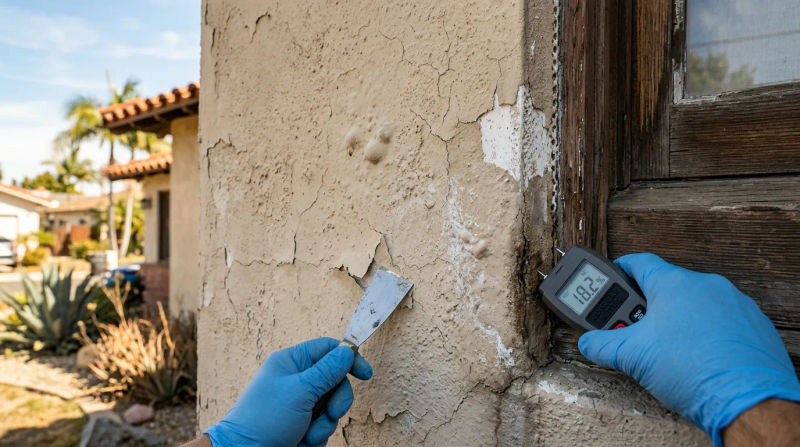
As a Senior Home Services Technician with over a decade of experience in Orange County, I’ve seen firsthand how our beautiful coastal weather can take a toll on a home’s exterior. You might be enjoying the last days of summer, but now is the perfect time to take a walk around your property. Have you ever leaned against a stucco wall and come away with a chalky powder on your sleeve? Or perhaps you’ve noticed fine, hairline cracks starting to form around your window frames. These seemingly small issues are your home’s way of telling you that its protective layer - the paint - is beginning to fail.
Here in Midway City, September is a critical month for home maintenance. Before the first autumn showers arrive, it’s wise to identify and address any weaknesses in your exterior paint. A small compromise now can become a significant moisture problem once the rains begin, leading to more extensive and costly repairs down the line. Let’s walk through the key warning signs our technicians look for.
Common Signs and Symptoms
Your home’s paint is more than just a color choice; it’s a crucial barrier against sun, moisture, and salt air. When this barrier weakens, it shows distinct signs. A thorough inspection by our trained crews always involves looking for these seven key indicators of paint failure.
- 1. Chalking or Powdery Residue: This is one of the most common early warnings, especially for chalking paint on stucco Midway City. Run your hand over a painted surface, particularly a south- or west-facing wall that gets a lot of sun. If a fine, colored powder comes off on your hand, the paint’s resin is breaking down from UV radiation. This chalky layer signals that the paint is no longer providing effective protection.
- 2. Cracking and Alligatoring: Look closely at surfaces, especially near corners and joints. You might see fine, hairline cracks or a more advanced pattern that looks like reptile skin, often called “alligatoring.” We frequently find cracked exterior paint near windows and door frames, where temperature fluctuations and movement cause stress. These cracks are direct pathways for water to seep into your walls.
- 3. Blistering, Bubbling, or Peeling Paint: If you see bubbles or areas where the paint is lifting and peeling away, it’s a clear sign of a loss of adhesion. This exterior paint peeling is typically caused by moisture or heat getting trapped behind the paint film. The bubble is a pocket of water or air pushing the paint off the surface. This is a serious red flag that indicates water is already getting where it shouldn’t be.
- 4. Significant Fading: While all paint fades over time, rapid or uneven fading indicates that the paint’s pigments have been broken down by the relentless Southern California sun. The walls that face south and west are most susceptible. Fading isn't just a cosmetic issue; it means the paint's protective qualities have severely diminished.
- 5. Mold, Mildew, or Algae: Check the shaded, cooler, and more humid parts of your home, like walls under eaves or on the north side. Dark streaks, green patches, or black spots are signs of organic growth. This happens when moisture lingers on a surface with failing paint that no longer contains effective mildewcide.
- 6. Brittle or Failing Caulk: The flexible sealant around your windows, doors, and trim is called caulk. It’s designed to seal gaps and prevent water intrusion. Over time, it can dry out, become brittle, and crack or pull away from the surface. Failing caulk is like leaving a window open during a rainstorm - it invites water in.
- 7. Wood Rot or Stucco Damage: This is the most advanced stage of paint failure. If you can press a finger into a piece of wood trim and it feels soft or spongy, you have wood rot. For stucco homes, look for crumbling sections or deep, wide cracks. At this point, the paint has failed completely, and the underlying structure of your home is being compromised.
What Causes This Problem
Understanding why paint fails helps in making smart decisions about repairs and repainting. In our coastal environment, several factors work together to break down your home’s exterior coating.
Intense Sun and UV Exposure: The primary culprit in Orange County is the sun. UV rays relentlessly attack the chemical binders and pigments in paint. This chemical breakdown is what leads to chalking and fading, leaving the underlying surface vulnerable.
Moisture and Salty Air: The Midway City area experiences a persistent marine layer, fog, and humidity. Moisture is paint’s worst enemy. It seeps into microscopic cracks, gets trapped behind the paint film, and causes blistering and peeling. The salt in the air is also corrosive and can accelerate the deterioration of both the paint and the surface beneath it.
Poor Surface Preparation: A paint job is only as good as the surface it’s applied to. If an old, failing paint layer wasn't properly scraped, sanded, and cleaned, the new paint won't adhere correctly. Our organized workflows always prioritize meticulous preparation, as this step is the foundation for a durable, long-lasting finish.
Building Age and Materials: Many homes in the region, particularly the classic post-war starter homes and Ranch styles from the 1940s and 1950s, feature original stucco or wood siding. These materials have unique needs. Older stucco can be very porous, and wood expands and contracts with temperature changes. Furthermore, these properties may have many layers of old paint, some of which could be incompatible with modern formulas, leading to premature failure if not addressed correctly.
Seasonal Contaminants: During the late fire season, ash and soot can settle on exterior walls. These particles can trap moisture and pollutants against the paint surface, hastening its breakdown and complicating proper adhesion for a new coat if not thoroughly cleaned.
When to Call a Professional
Some homeowners are comfortable with DIY projects, but exterior painting often requires more than just a brush and a can of paint, especially when signs of failure are present.
You might consider a DIY approach for a very small, isolated issue, like touching up a tiny chip on a protected porch wall. However, it's time to call for professional help when:
- The problems are widespread. If you see chalking across an entire wall, cracking around multiple windows, or peeling in several spots, it indicates a systemic failure that requires a comprehensive solution.
- You see signs of underlying damage. Soft wood, crumbling stucco, or persistent mildew are problems that go beyond the paint. An experienced professional can diagnose the root cause and ensure the substrate is properly repaired before any painting begins.
- The work involves heights. Safety is paramount. Our crews are equipped with the right safety gear and training to work on multi-story homes or hard-to-reach areas. It’s not worth risking a fall.
- You want a lasting result. Knowing when to repaint before rains Orange County is key, and a professional job ensures it’s done right. Experienced professionals follow a standardized process: thorough power washing, detailed scraping and sanding, expert priming, and precise application of coatings formulated for our climate. This meticulous preparation is what ensures the paint job lasts for years, not just a single season.
- Your home was built before 1978. Many older homes, like those from the 1940s-1950s era, may have lead-based paint. Professionals are trained in lead-safe work practices to contain hazardous dust and protect your family and the environment.
Conclusion
Your home's exterior paint is its first and most important line of defense against the elements. By taking a few minutes this September to inspect it for warning signs like chalking, cracking, and peeling, you can catch problems early. Addressing these issues before the fall and winter rains arrive can save you from dealing with much larger headaches like water intrusion, wood rot, and structural damage.
Don't wait for a small crack to become a costly repair. Being proactive is the best way to protect your investment and maintain your home’s integrity and beauty for years to come.
If you notice any of these signs, contact a local General Contractor professional for an inspection.